
Given how much I admire the work of weavers Anni Albers, Tadek Beutlich, and Peter Collingwood, it probably comes as no surprise that I loved this retrospective of William Jefferies – A Life in Tapestry at Morley Gallery in London.
When I first started attending textile classes as a student at Morley, William’s tapestry class took place in the other half of the studio on the same evening. I could see the works slowly developing every week, but I don’t recall ever seeing any of his own pieces. William retired from teaching at Morley in 2020, so it seems fitting that this celebration of his work should take place in the Morley Gallery. Congratulations to Anna White for having the idea and the energy to make it happen.
Mixed materials
Several aspects of William’s work and approach appeal to me. First, his love of experimenting with materials and techniques. As well as wool, his tapestries may feature fishing line, tarred jute, lurex, waxed rayon, abaca fibre, nettle yarn or goat hair. Techniques include traditional flat weave, knots, wrapping and whipping, forming snaking borders or lines across the surface.
The juxtaposition of different textures and colours leads the eye on, always spotting something new on every viewing.
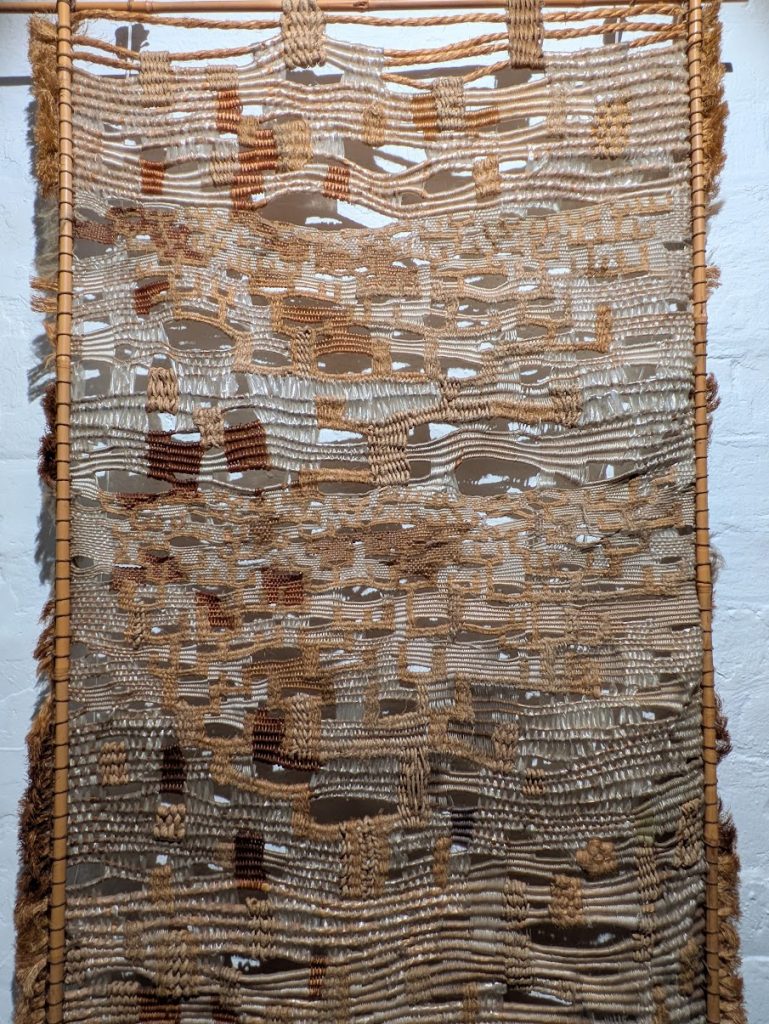
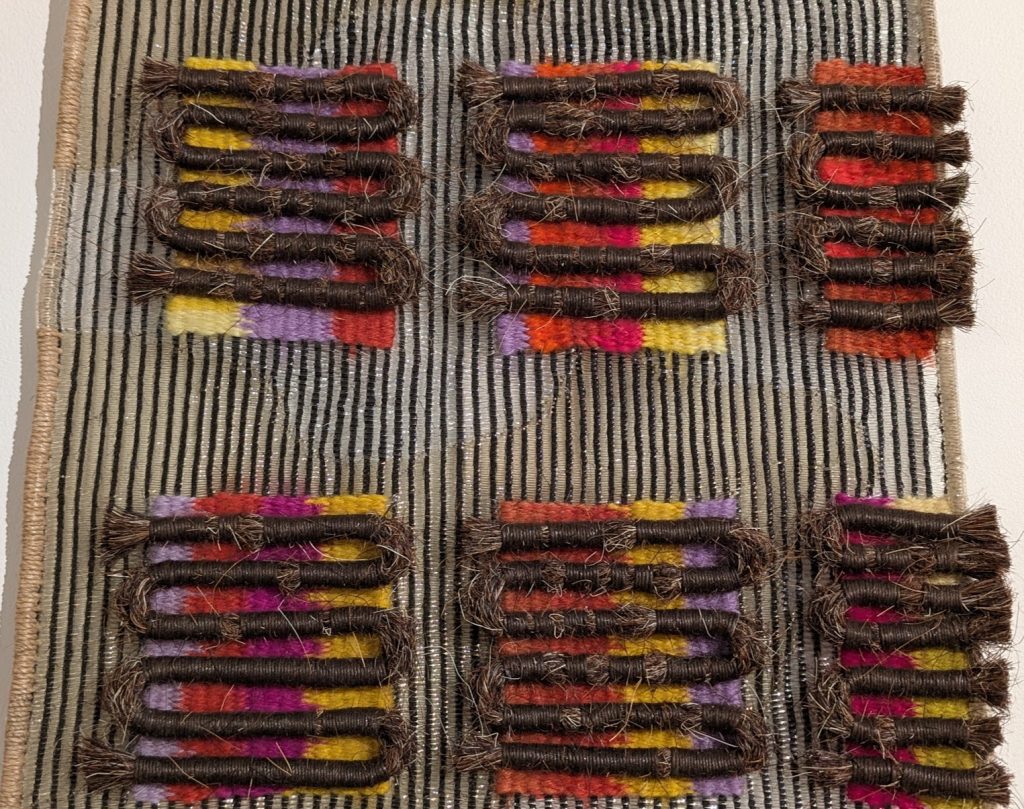
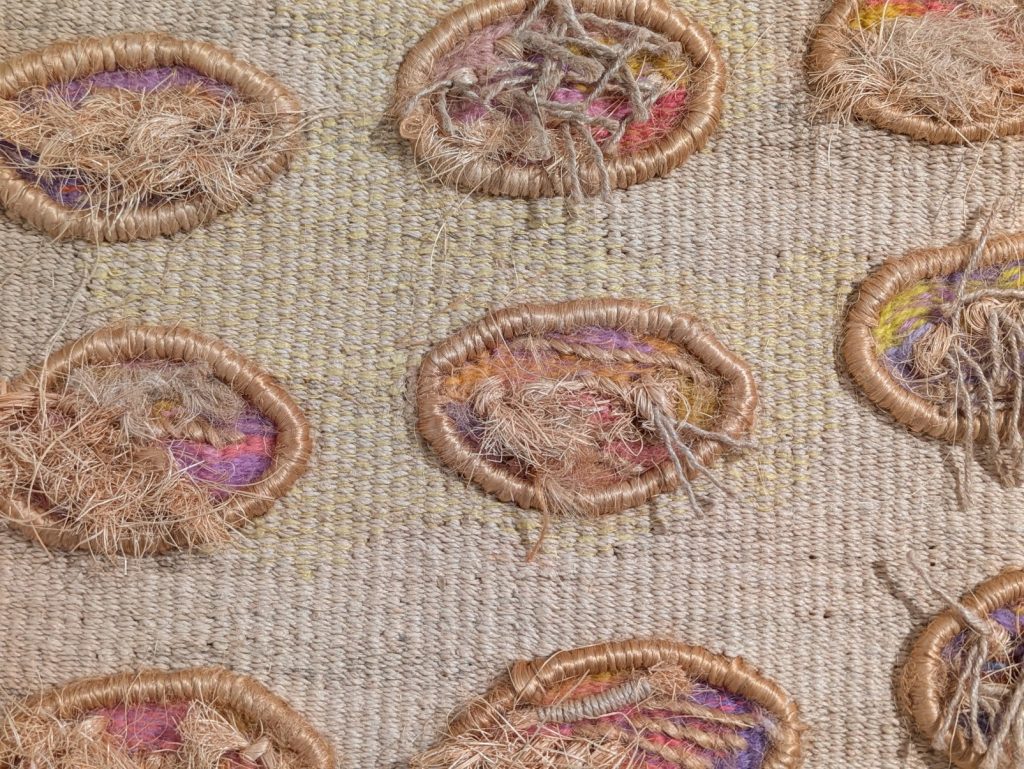
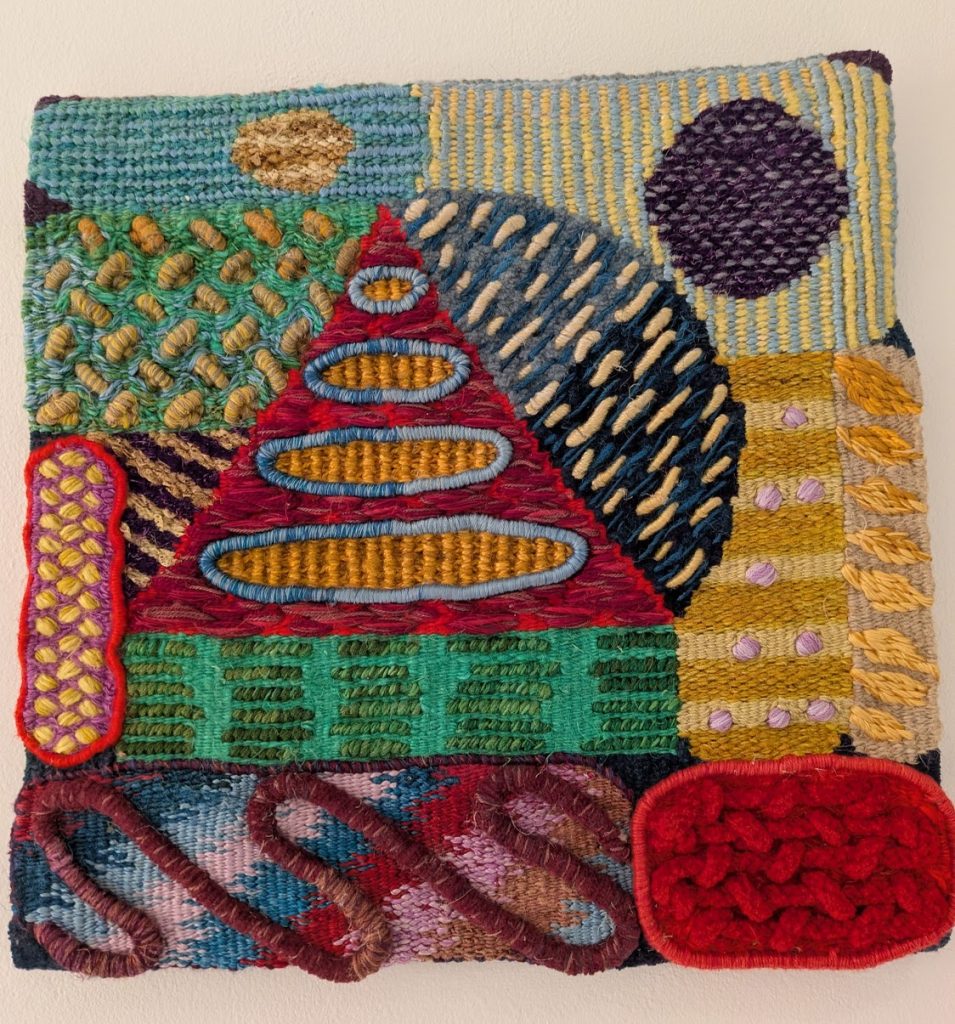
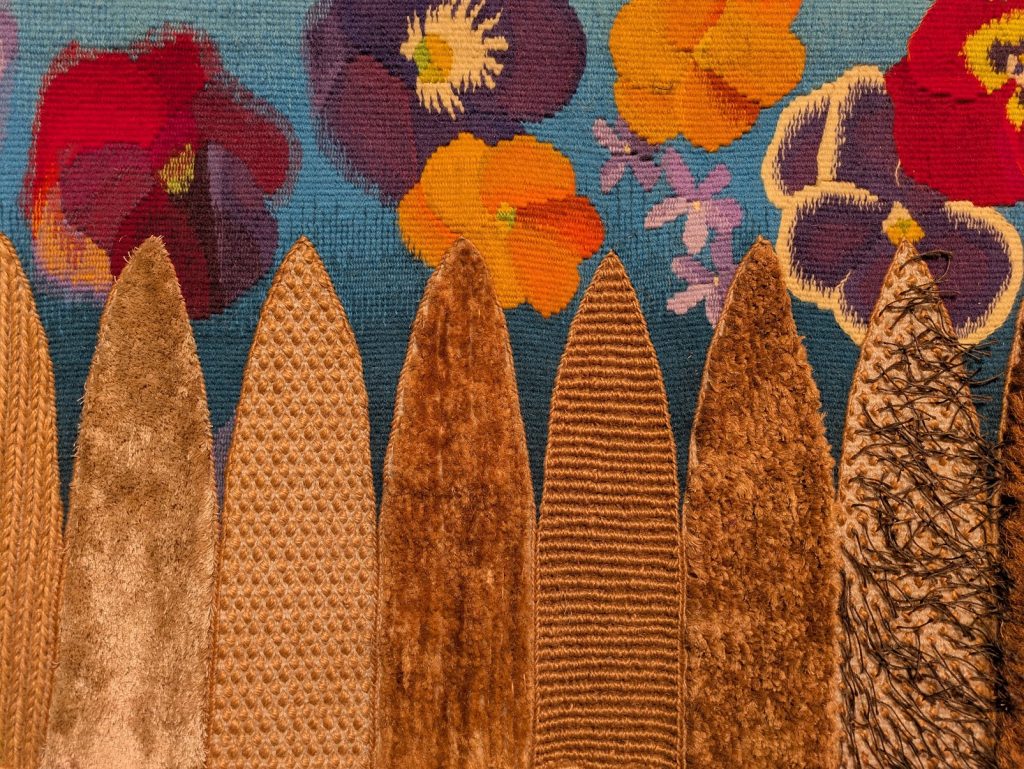
It’s not just materials and textures that contrast with each other – several of his works are tapestry collages, with different parts woven in different styles. He has a vast collection of sketchbooks, some of which are on show, filled with cuttings, sweet wrappers, and bits of fabric as well as sketches that provide inspiration for his work.
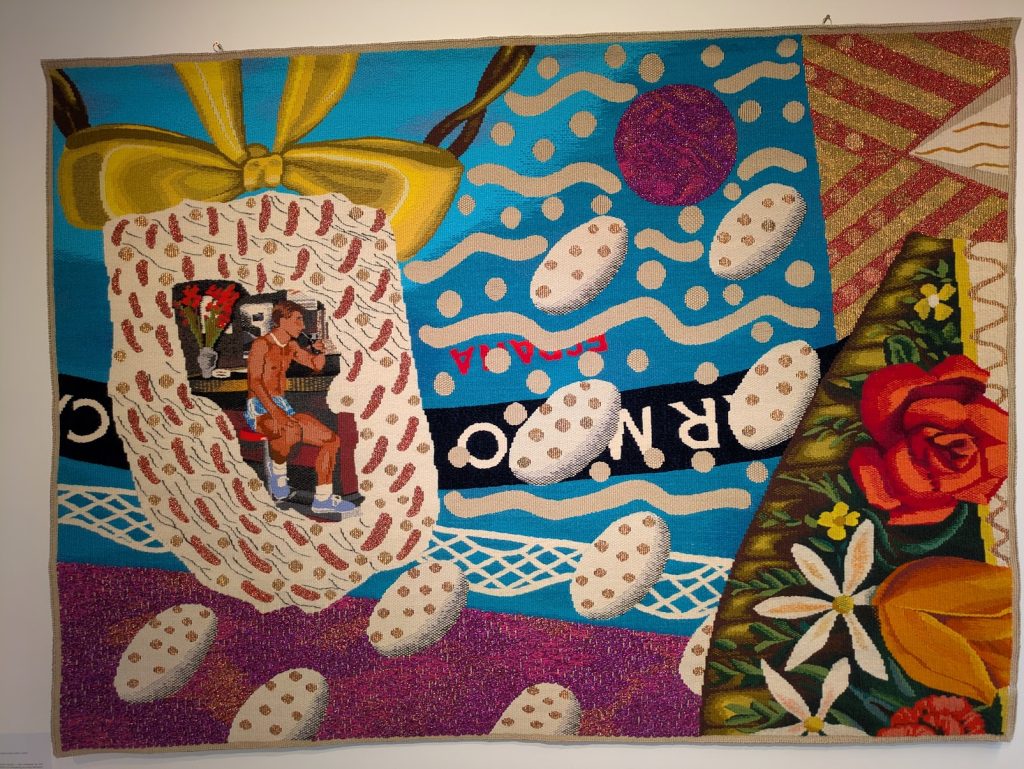
Beyond the boundaries
In the early days, William experimented with mounting his tapestries on board or framing them with metal rods to maintain the shape. At some stage, however, he decided to abandon the traditional rectilinear shape and create curved or irregular borders or even 3D forms.
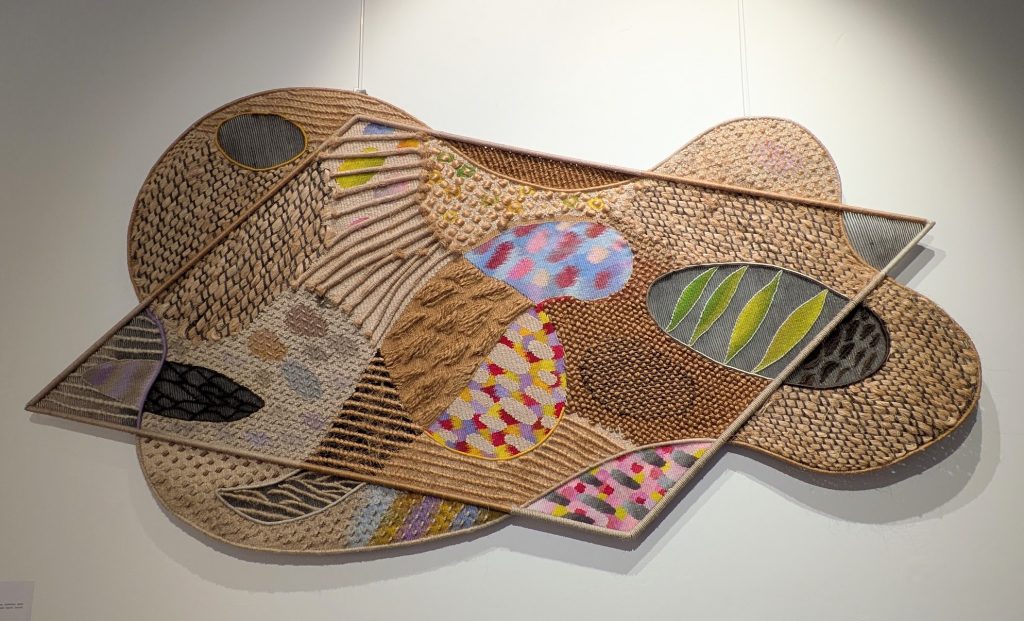
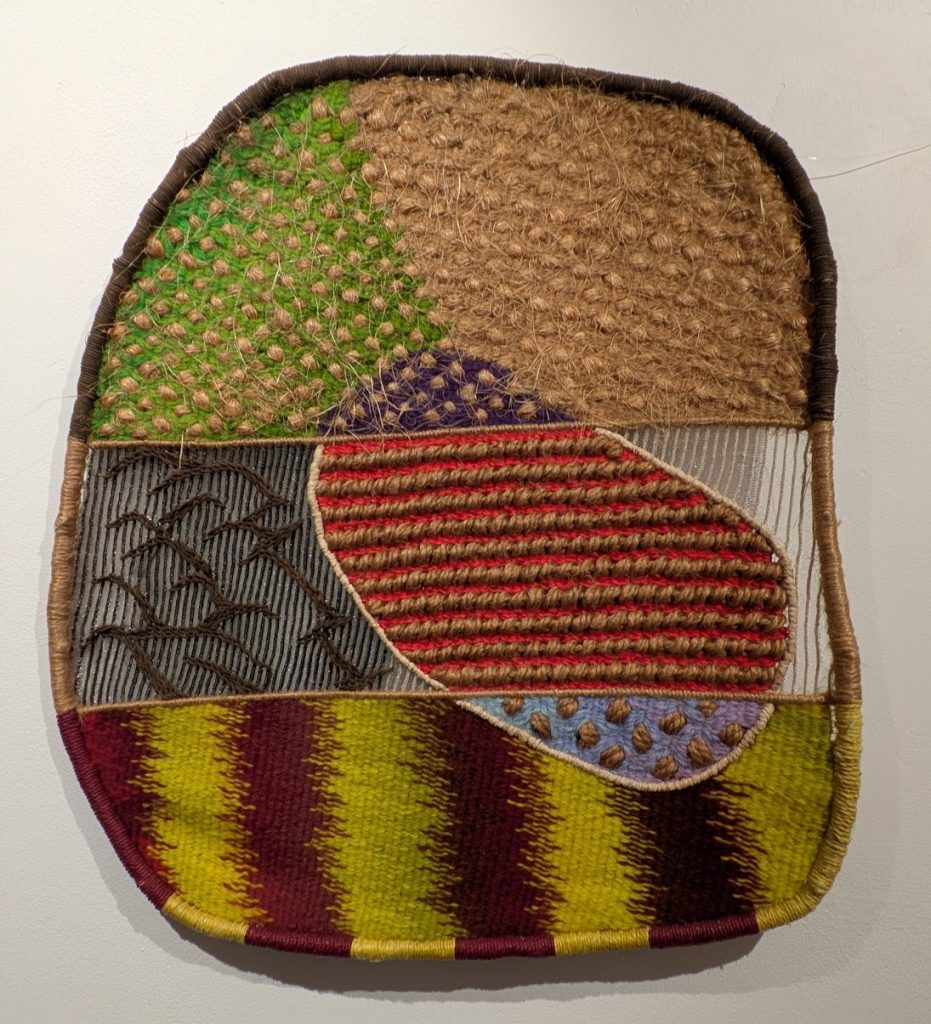
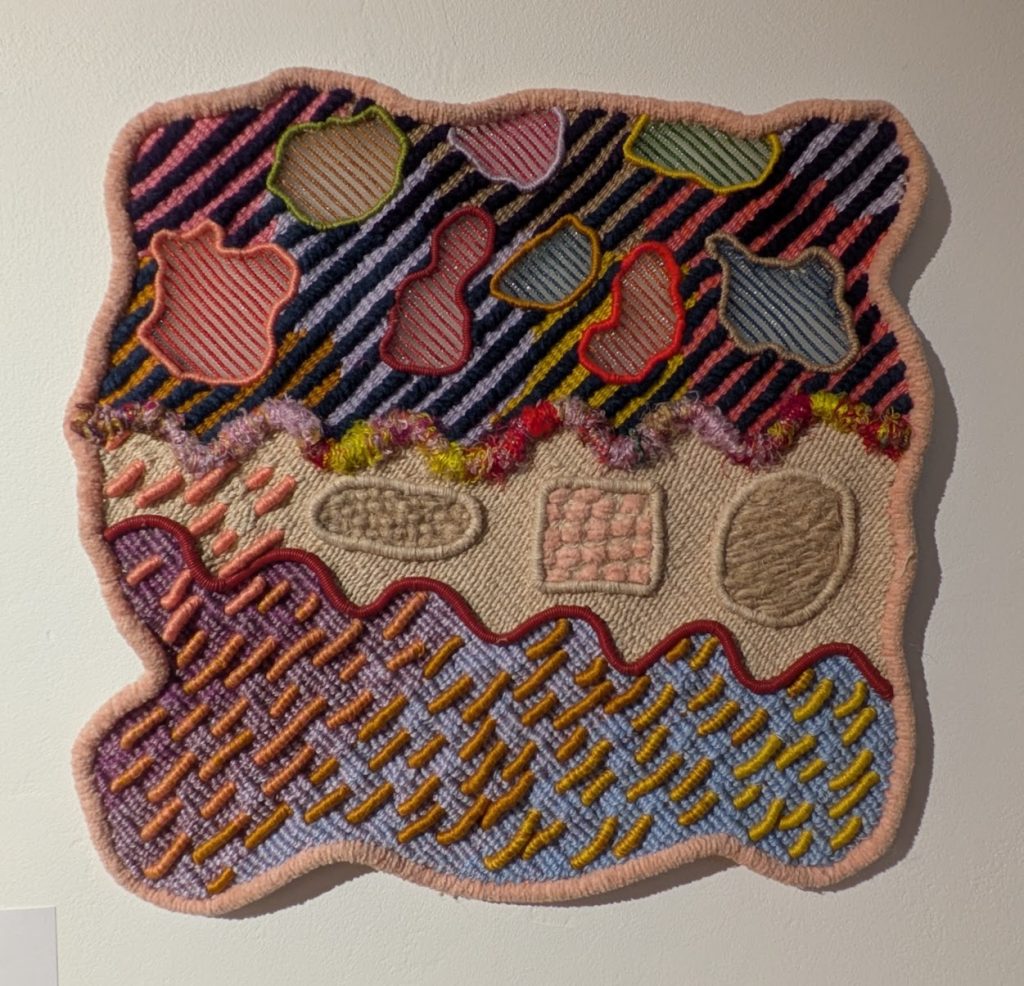
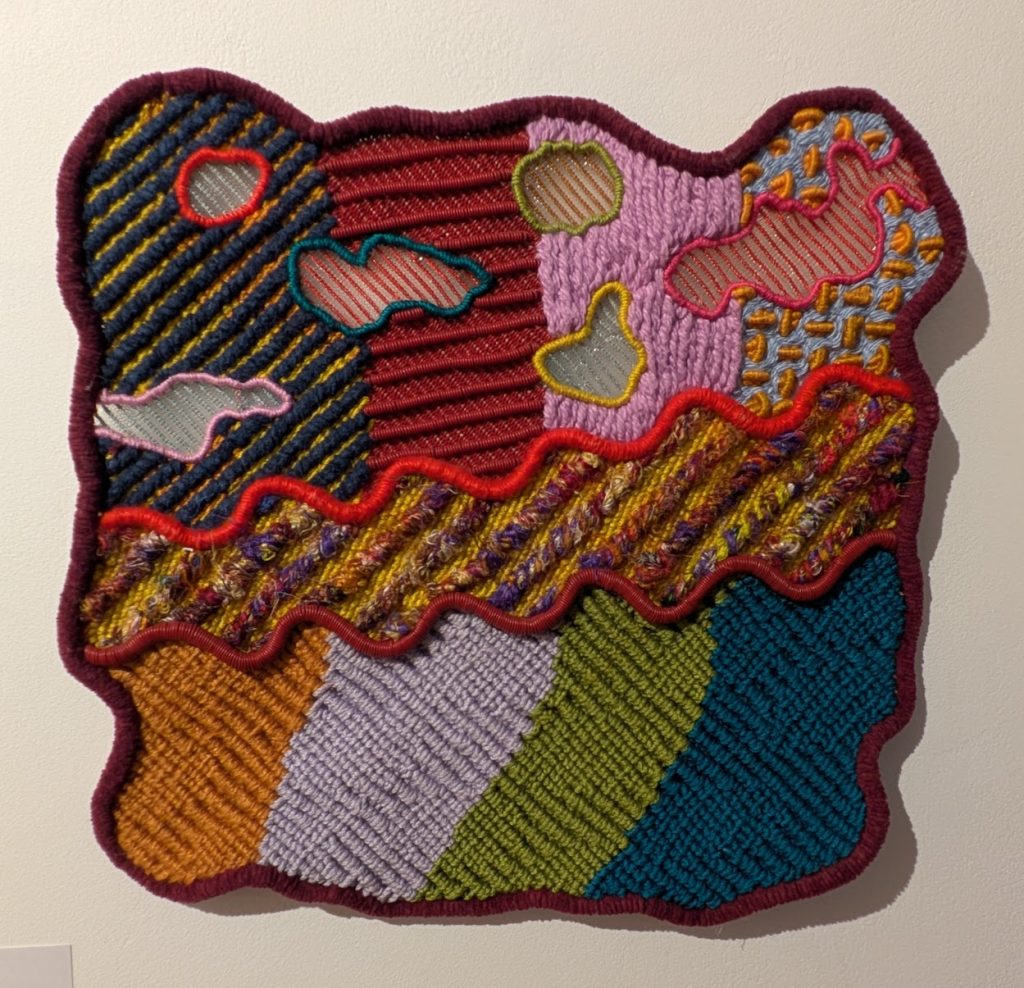
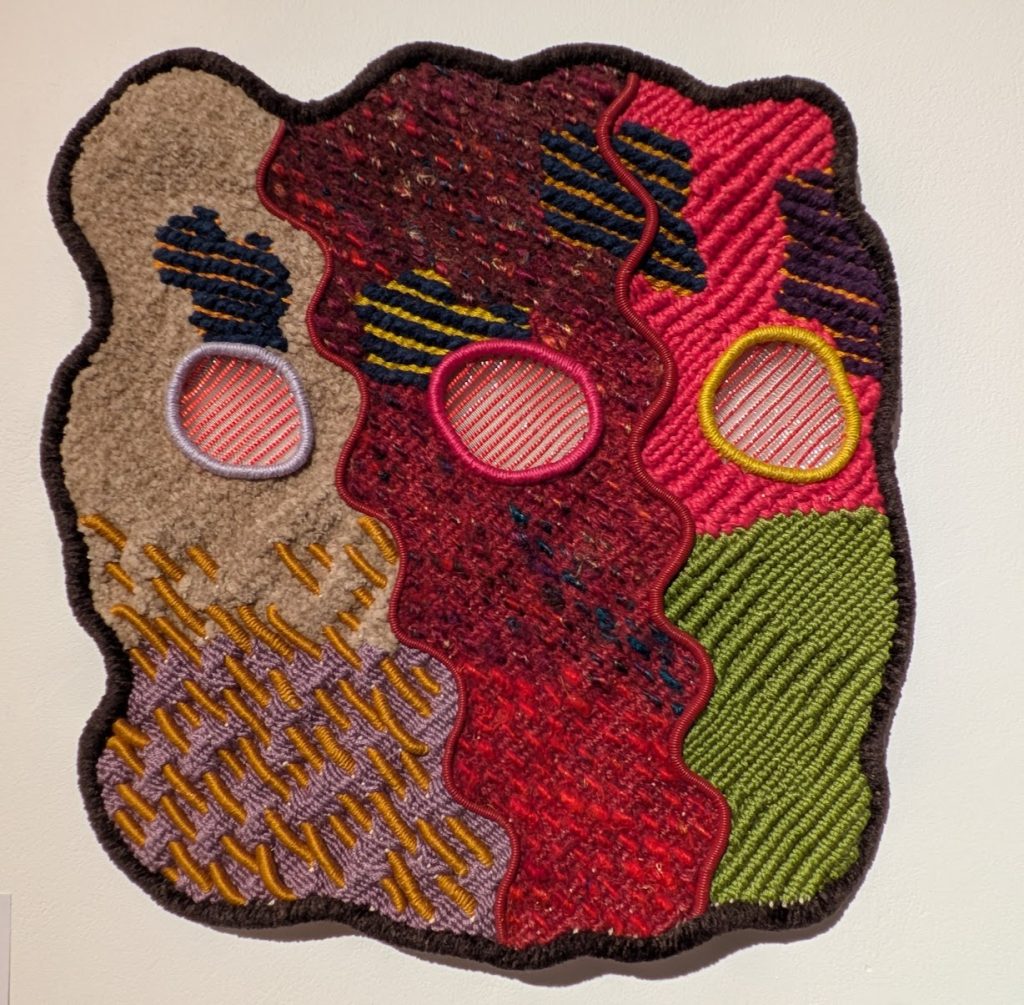
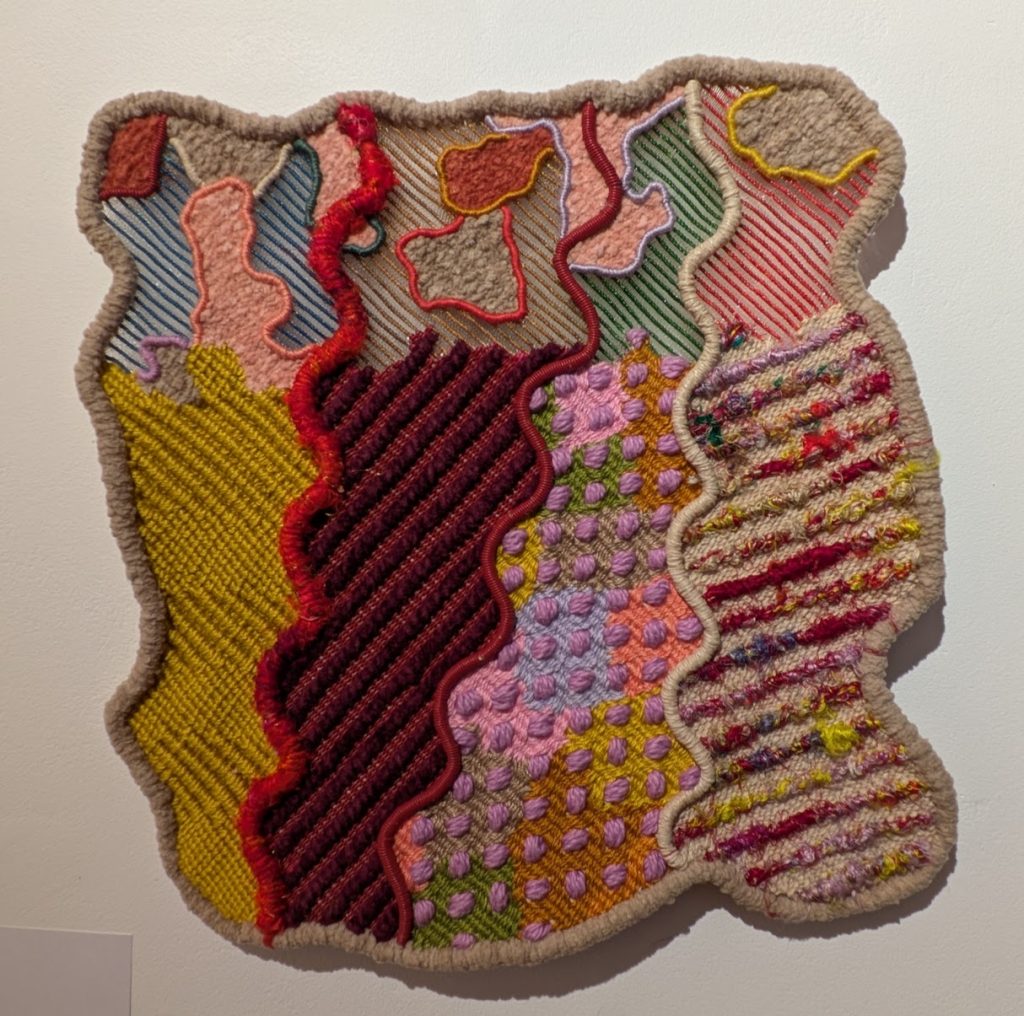
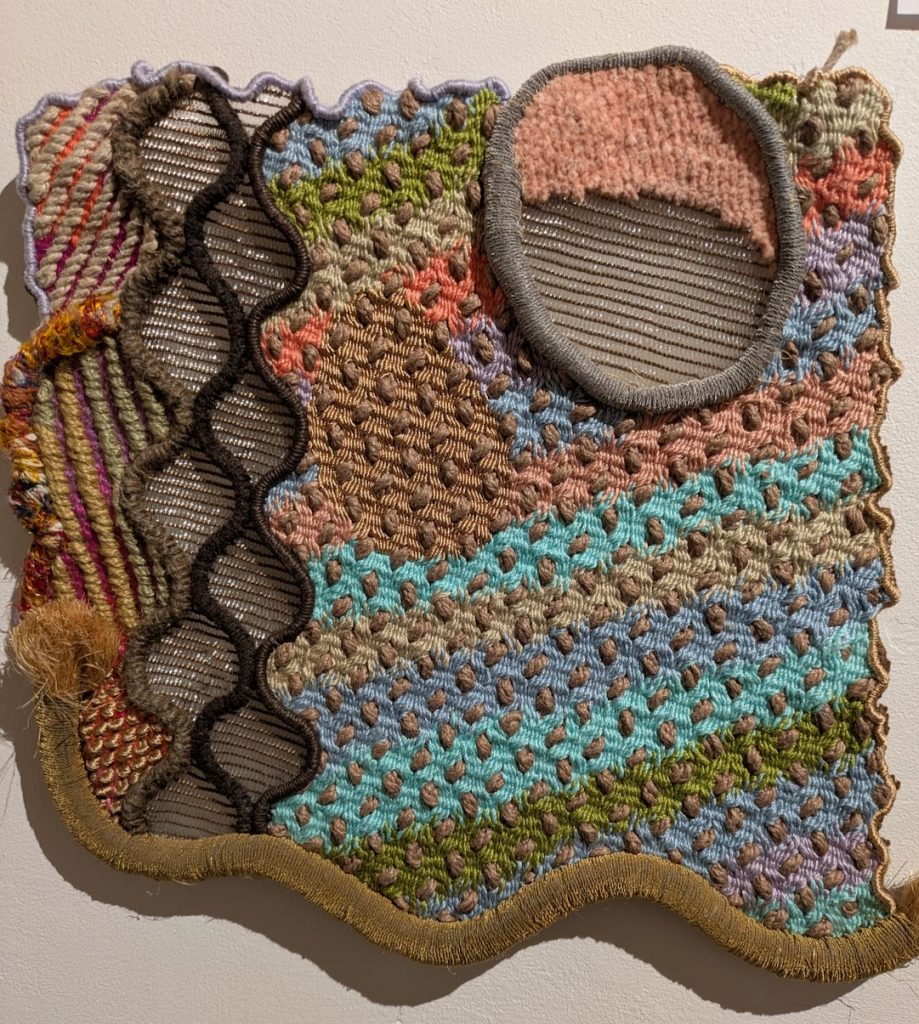
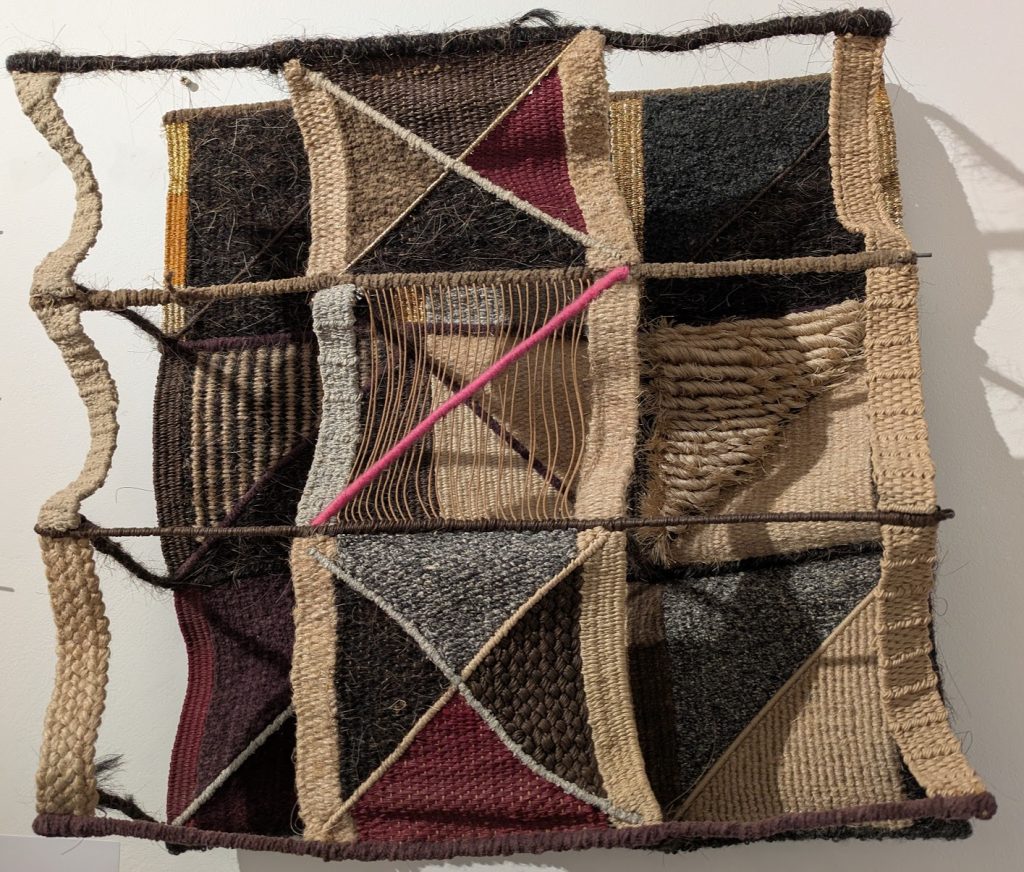
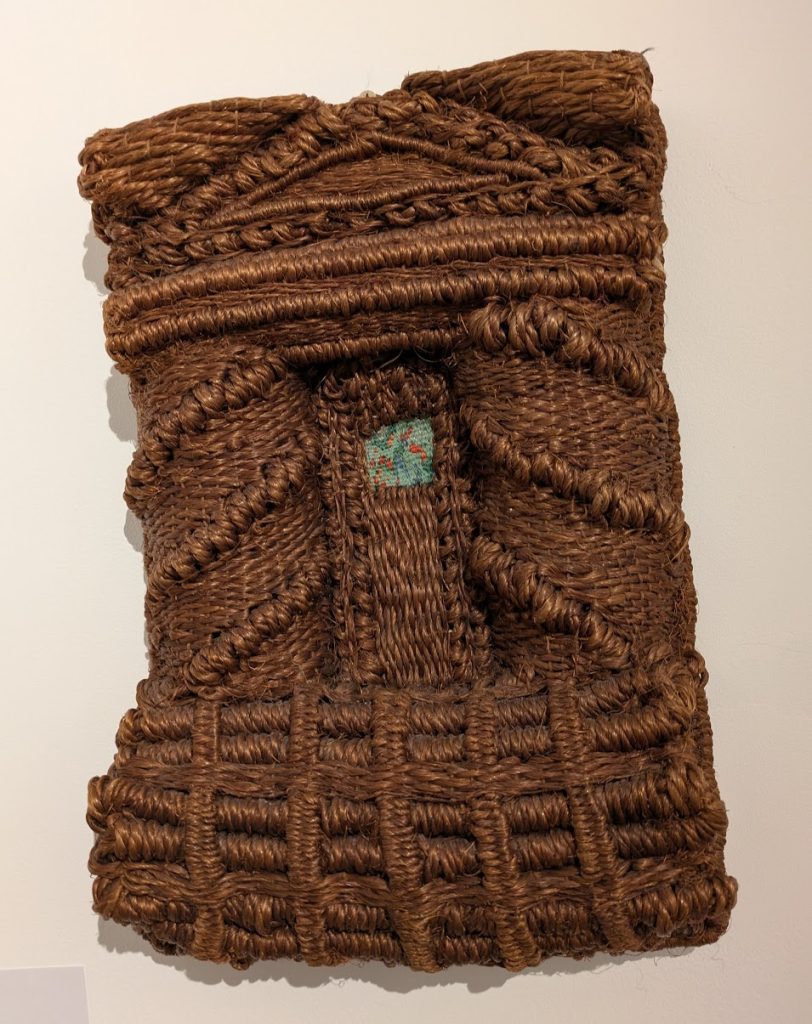
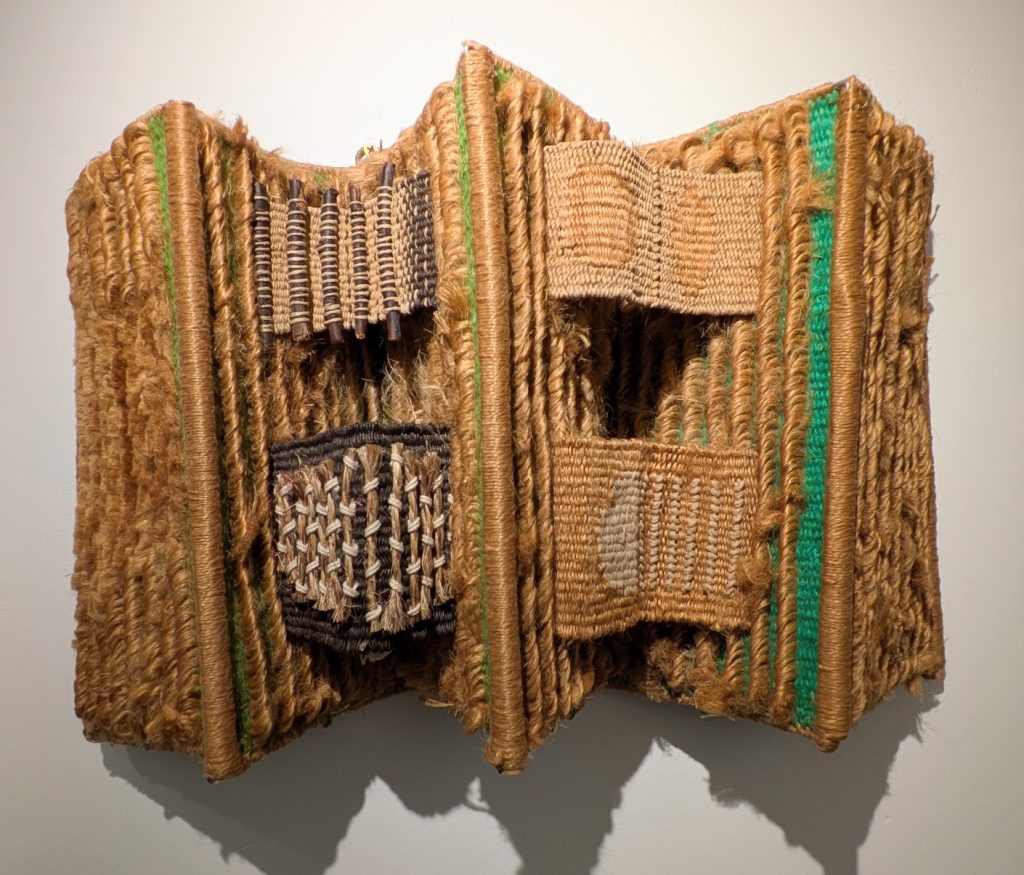
A local blacksmith, Shelley Thomas, created undulating metal poles she called “wiggles”, which William used as looms. One of my favourite works, Franco, seen in the photo at the top of this post, was created in this way, with linen and jute “shoots” sprouting from the surface – denser in the valleys than on the ridges. William has generously donated it to the Morley College Art Collection, so hopefully it will be around for years to come.
Designer AND maker
In the exhibition catalogue, Alan Hertz, a long-time student and friend of William’s, describes a visit with him to see the Raphael Cartoons in the Victoria & Albert Museum. Rather than admiring them, William regarded them as acts of dispossession: a painter was telling weavers what to weave, reducing them to artisans. He will not work to others’ designs or employ other people to help with his.
An early experience probably didn’t help. After being taught by Archie Brennan at the Edinburgh College of Art in the 1970s, William worked at the Dovecot Studio for eight months. One of his tasks was to work on the background of a Louise Nevelson collage being made into a tapestry. It was a single colour, blue, and he must have been bored to tears. At least if you design your own work you only have yourself to blame!
William Jefferies – A Life in Tapestry runs at Morley College until 7 February. Hurry!

wow – they’re absolutely beautiful! Thankyou so much for not just flagging them up Kim, but also posting such fantastic images, I shall try to go today!
How wonderful to hear that William’s work is on display and how disappointing that it will be over by the time I return to the UK. I am all the more delighted that I attended his workshops at Morley and got to see and touch some of his early and experimental pieces. He has had a great influence on my weaving style, most particularly in giving me the confidence to do my own thing, even though there were raised eyebrow moments when he stopped infront of a piece I was working on🤷🏽♀️
What a shame you missed his exhibition Joan. I’m sure he was a great tutor – at least there is a piece of his work in the permanent collection at Morley Gallery.