One of my regular basketry students at Morley College was a ceramics tutor, Annette Welch. She attended several of my courses and we often chatted about the possibility of coating some baskets made from natural fibres with porcelain slip and then firing them. The fibres would, she assured me, burn off in the kiln, leaving a porcelain shell behind.
Well, this year she decided to retire, so it was now or never!
Week 1
I don’t know anything about ceramics, so it really was trial and error! I started with a twined basket made from paper string and a small looped cone made from crocosmia leaves.
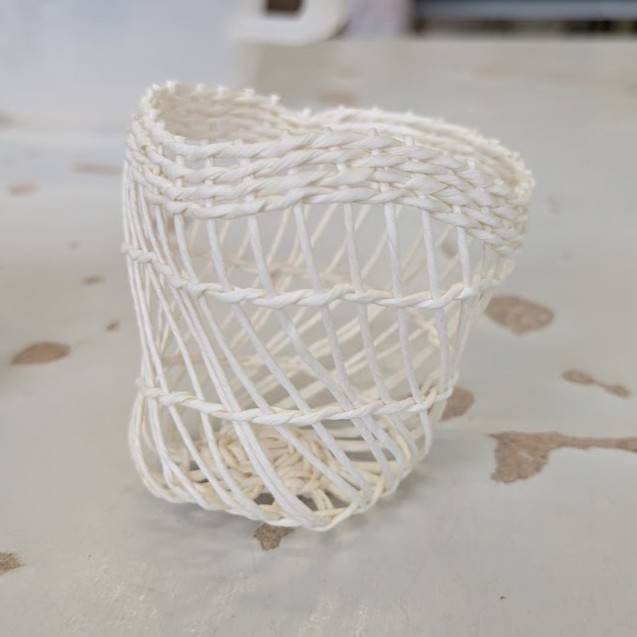
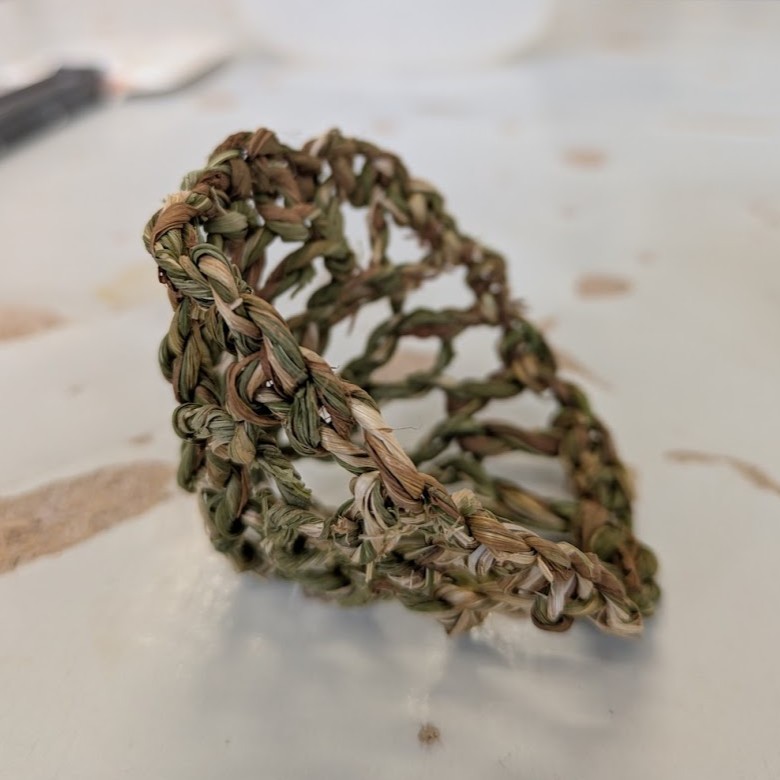
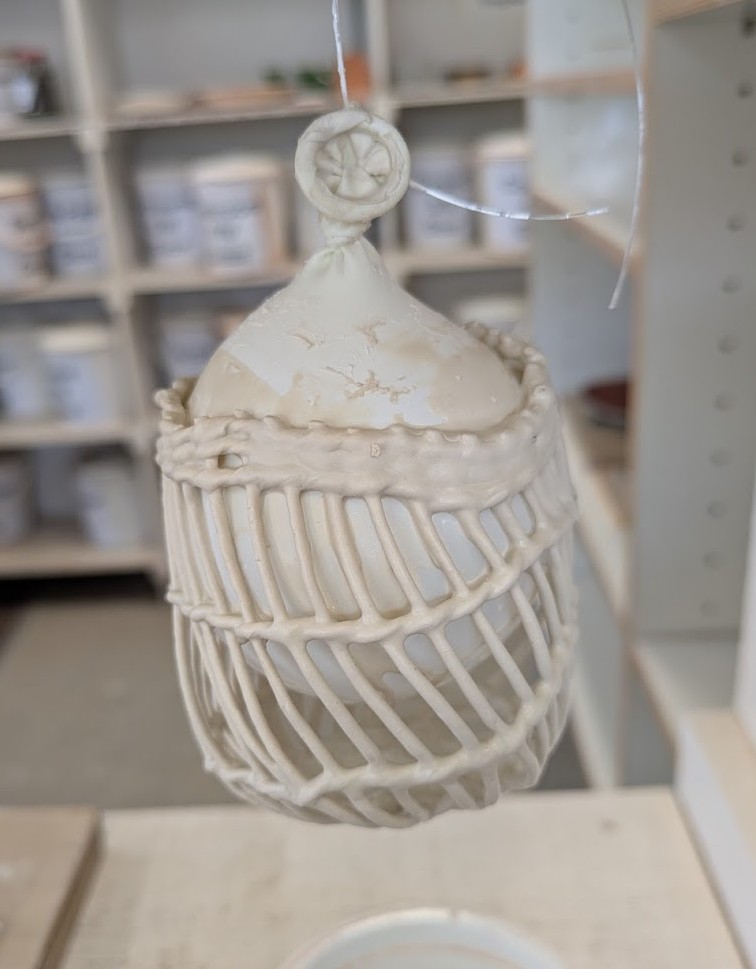
I had to devise a way of suspending the pieces in some way after dipping – Annette suggested supporting them with a balloon. This worked fine for the paper basket, but the crocosmia piece wasn’t really deep enough or stiff enough for that to work, so I ended up suspending it with fishing line.
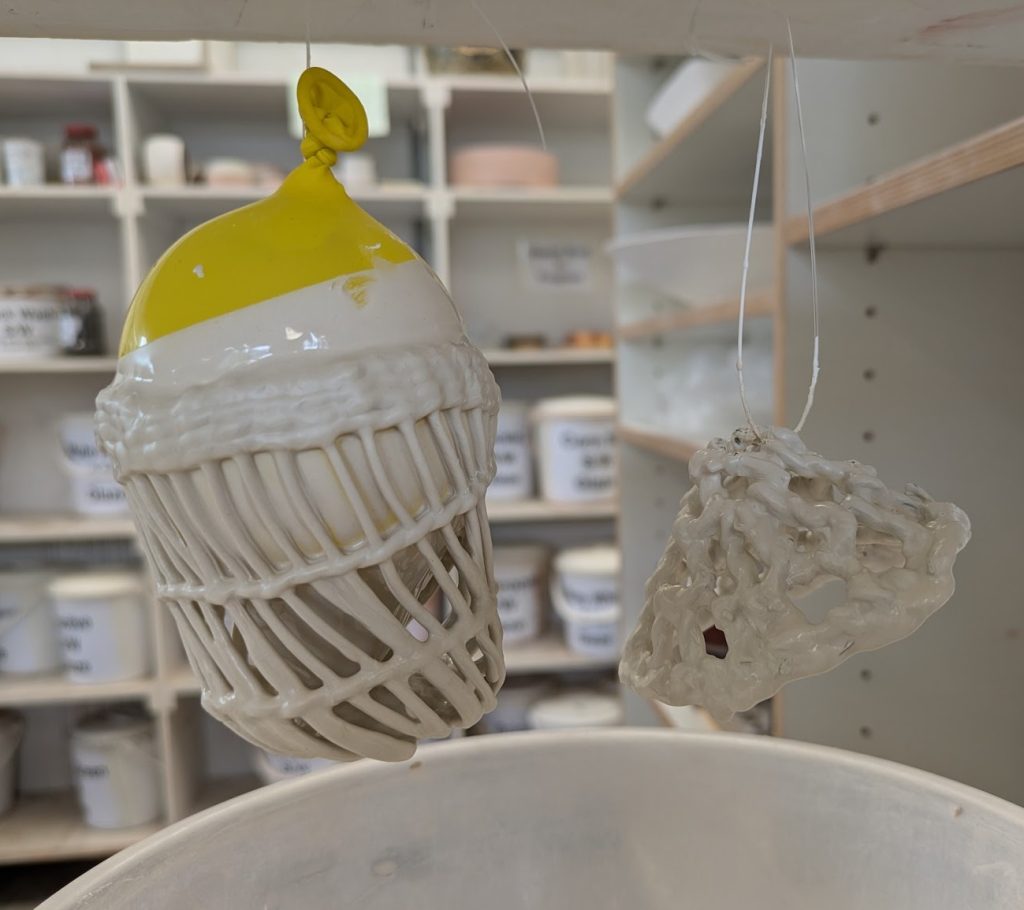
The slip was a little thick, so I thought I would attempt to speed up the drying of the crocosmia piece with a hairdryer. However, as the slip dried out, cracks started to appear, so I stopped and went and had lunch instead.
Because of the thickness of the slip I didn’t dip the paper basket again but left it to be fired. Even without using a hairdryer the slip started cracking as it dried. I diluted the slip a bit and dipped the crocosmia piece again. It’s tricky balance: more dips make the piece stronger but lead to loss of detail. I left the pieces on a tray to be fired.
At lunchtime I dashed home and made another paper string vessel, which I brought back and dipped once in the diluted slip. I thought I would do another dip in diluted slip the following week.
Week 2
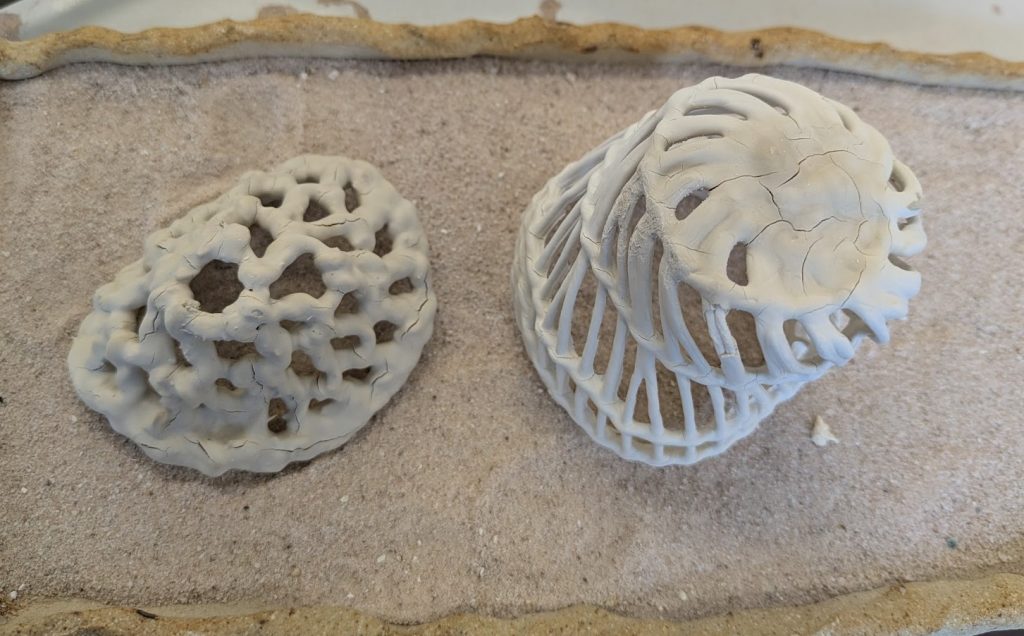
I was very excited to see that both pieces from week 1 had survived the kiln. There were lots of cracks, but they felt surprisingly robust. There wasn’t much detail on the crocosmia piece, but on the twined basket, which had only one dip, the texture was more obvious.
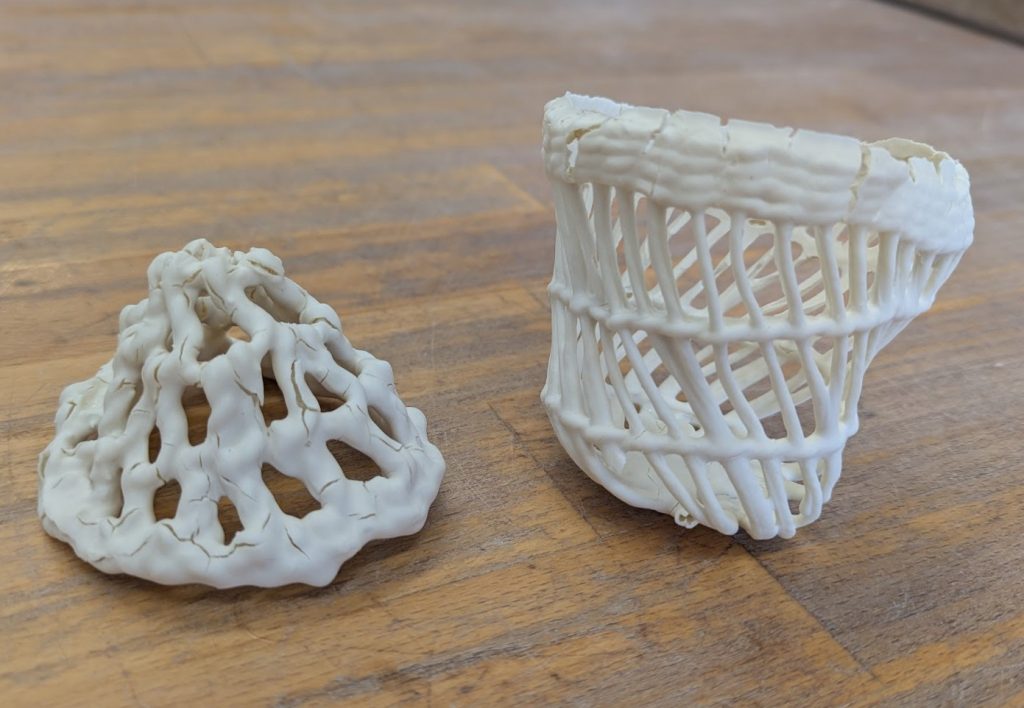
The cracks occur because the slip shrinks as it dries, but the underlying basket doesn’t. Annette suggested soaking the baskets before dipping, because that would cause the fibres to swell, and they might also shrink as they dried along with the porcelain, leading to fewer cracks.
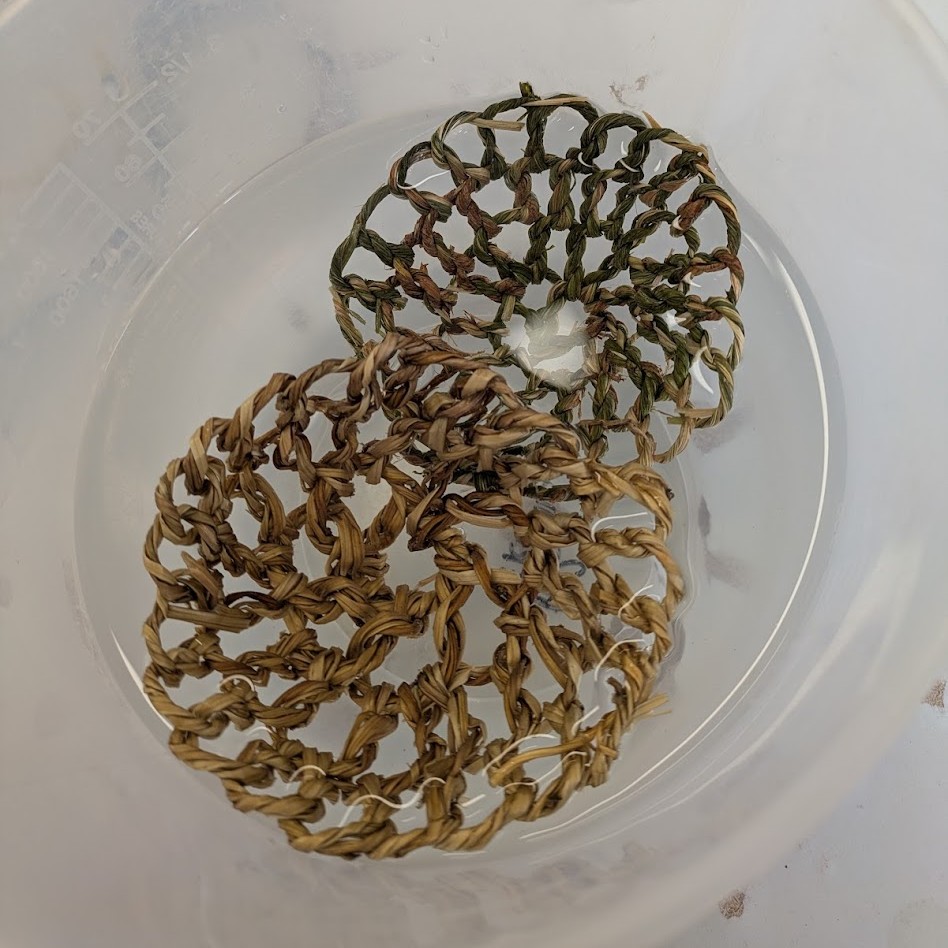
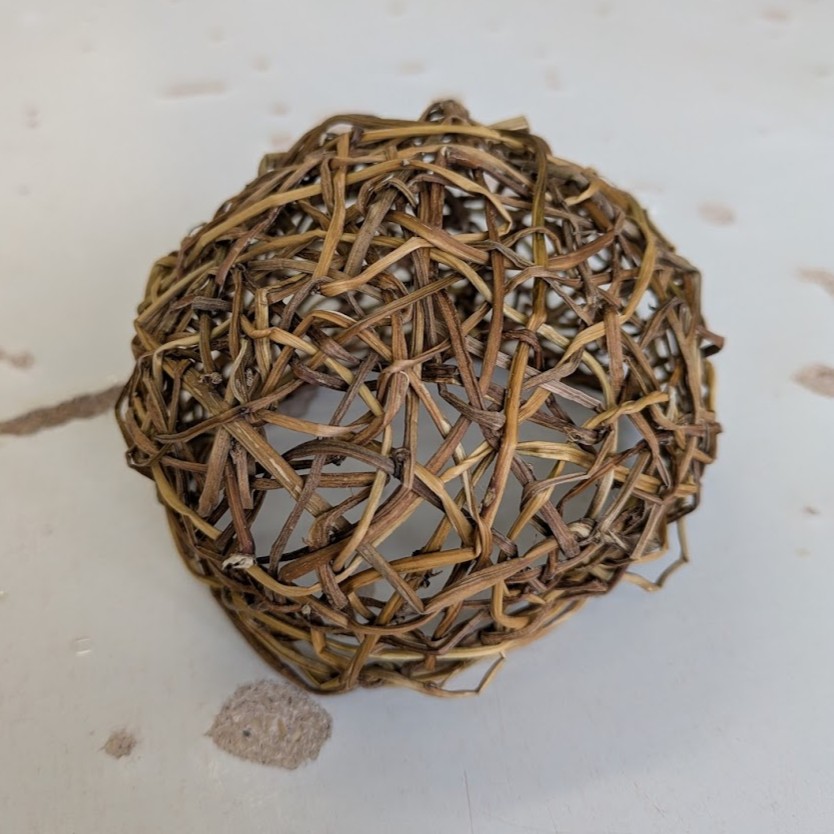
So I soaked a couple or looped pieces made from day lily leaves and daffodil stalks and a random weave piece made from bindweed. Then I dipped them twice in diluted slip and left them to be fired. The image below shows the looped pieces after one dip – the fibres are still visible through the slip.
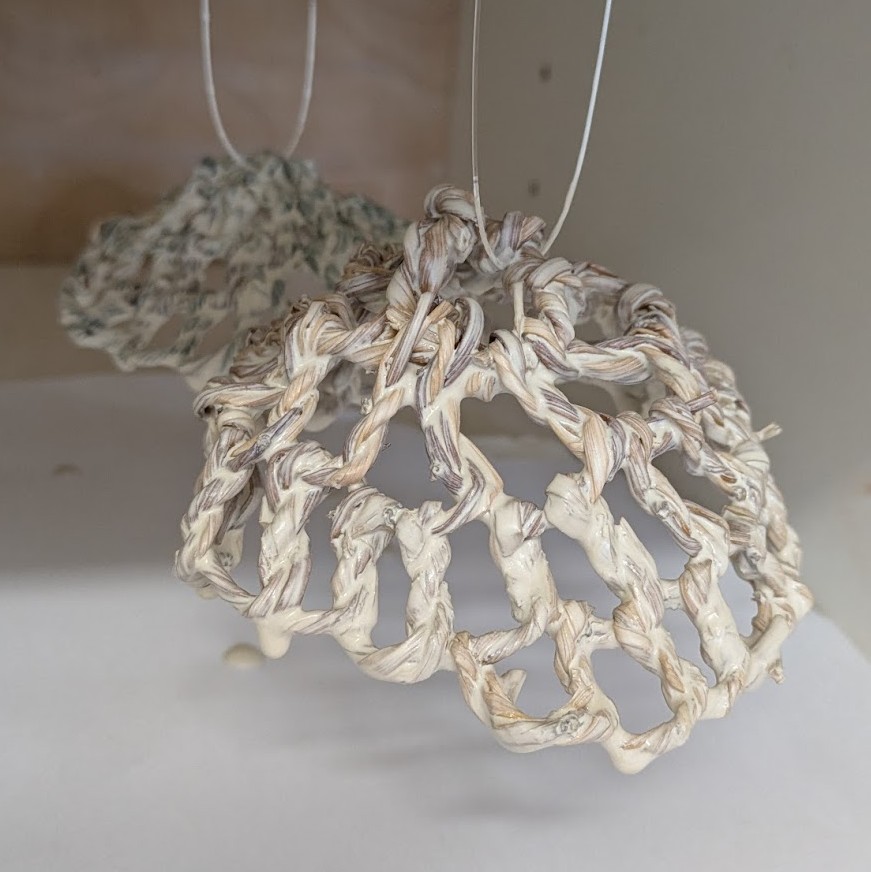
Annette suggested that I could try biscuit firing one of the looped pieces and the paper basket that had dried out from last week. Then the following week I could try glazing them to see how they would look in colour.
Week 3
Sadly, the paper vessel did not survive the biscuit firing. It was only dipped once, which was clearly not enough. Thankfully, the looped piece sailed through – and with fewer cracks.
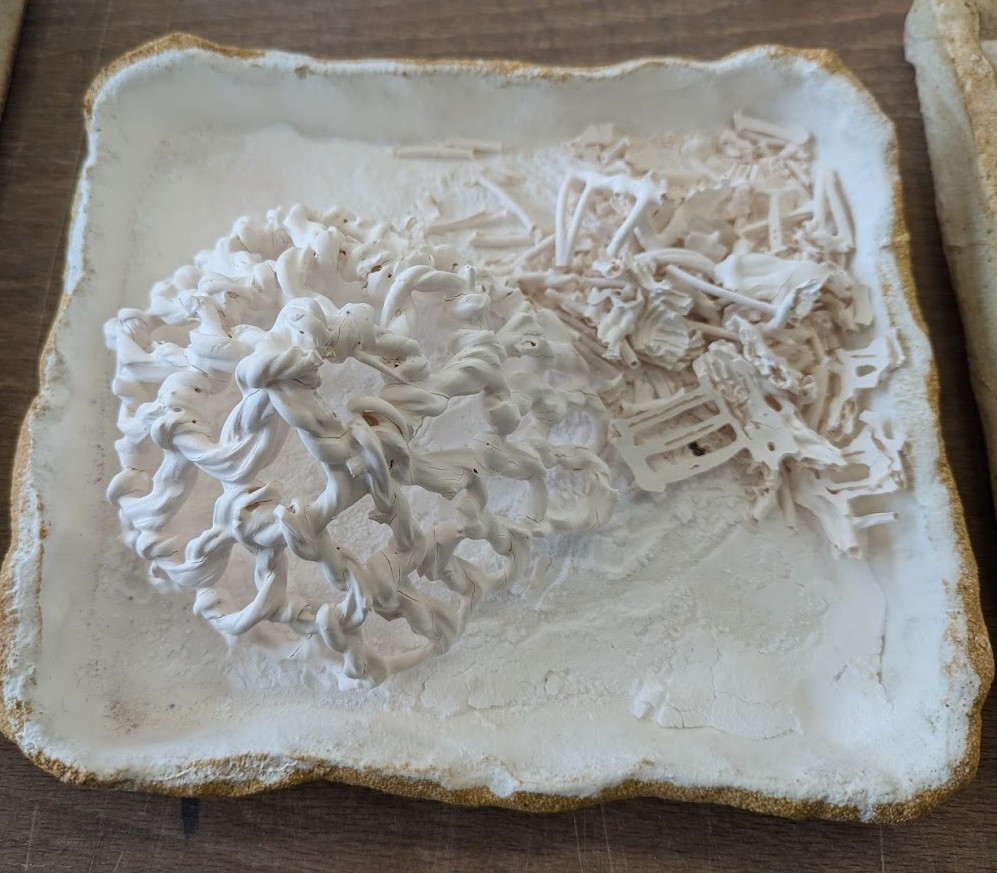
There were so many glazes to choose from – and I learned that final colour is often very different from the raw glaze. Here’s my looped piece with a celadon glaze before firing.
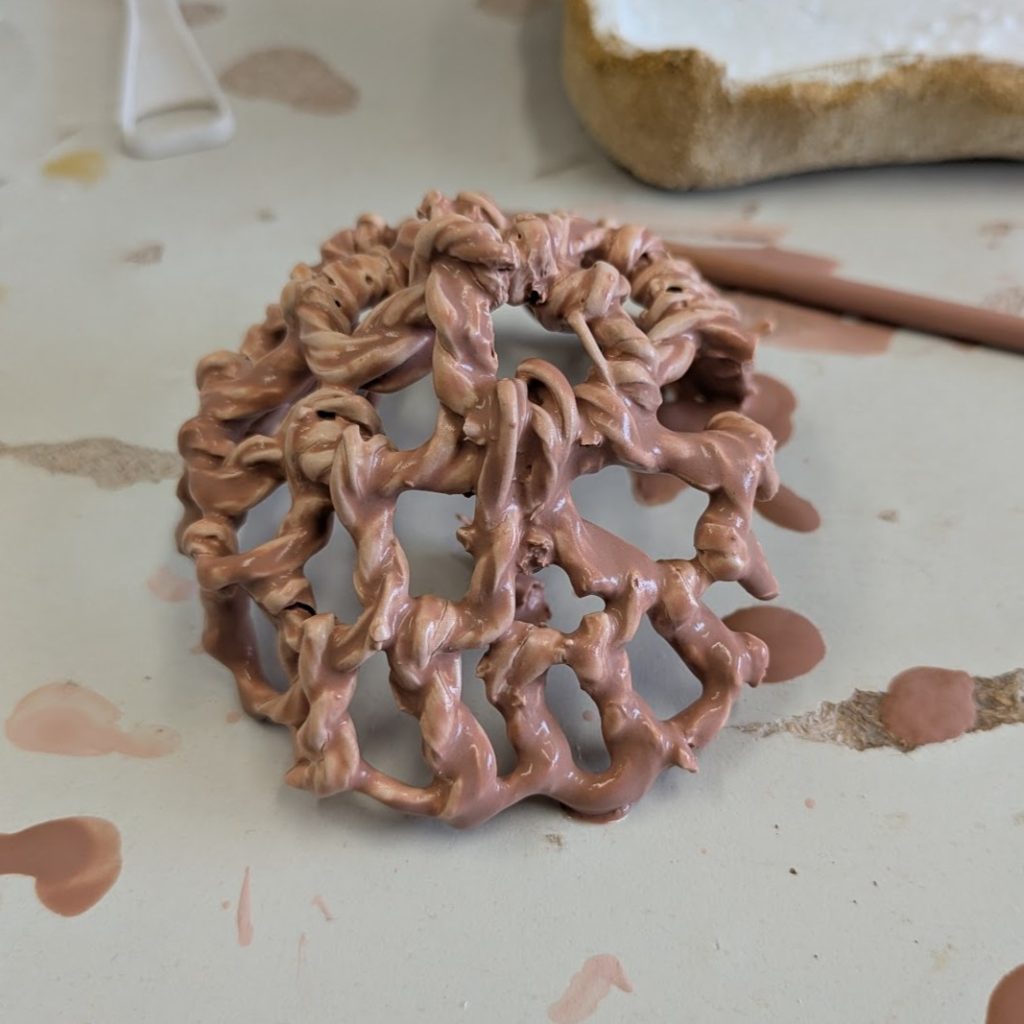
Unfortunately, part of the piece broke off during glazing, as the clay absorbed the moisture and softened, causing it to collapse. Nevertheless, I was pretty happy with the final result – there’s lots of visible movement and texture.
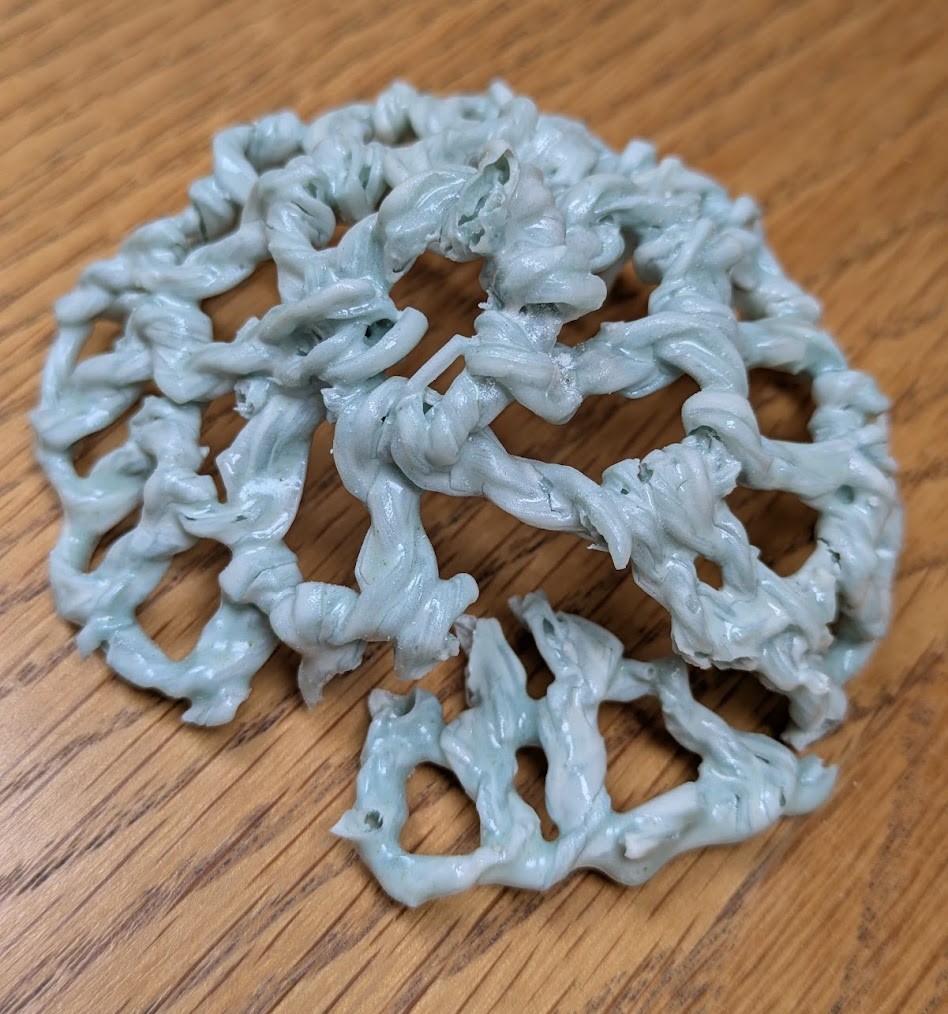
The random weave piece, which wasn’t glazed, also turned out quite well, though there was a bit of infill and a few cracks.
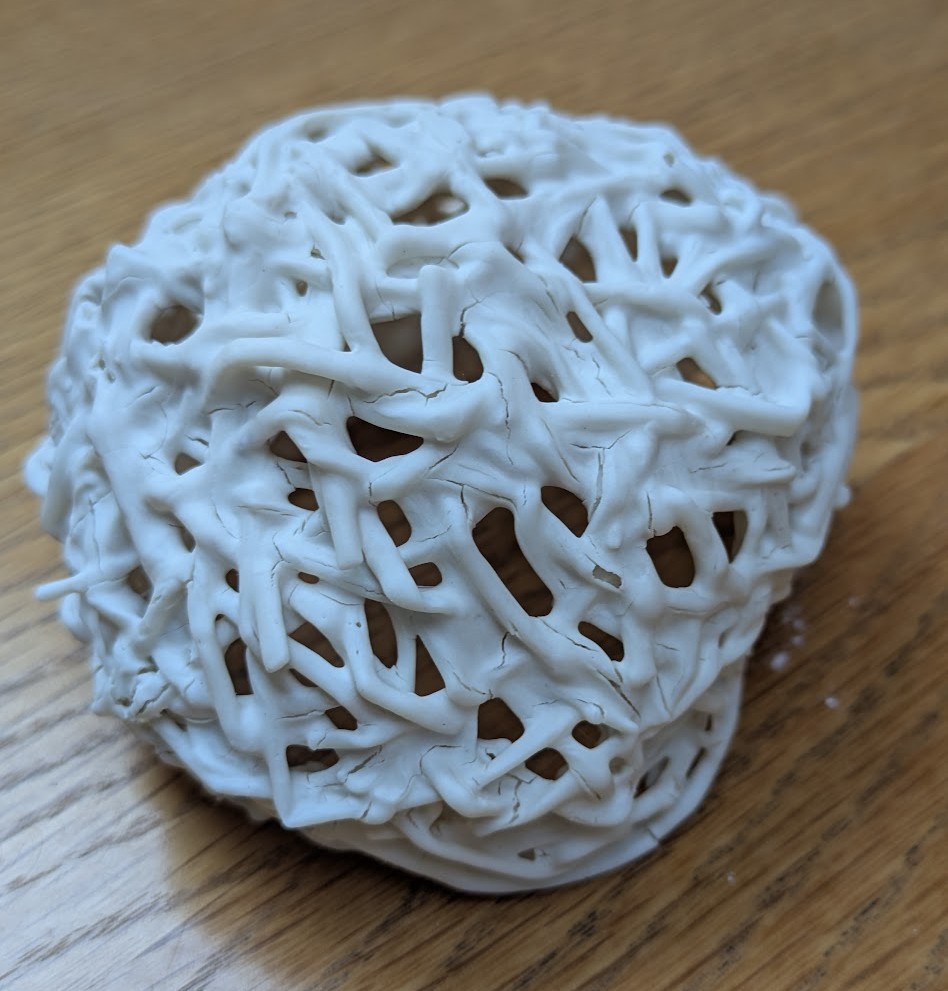
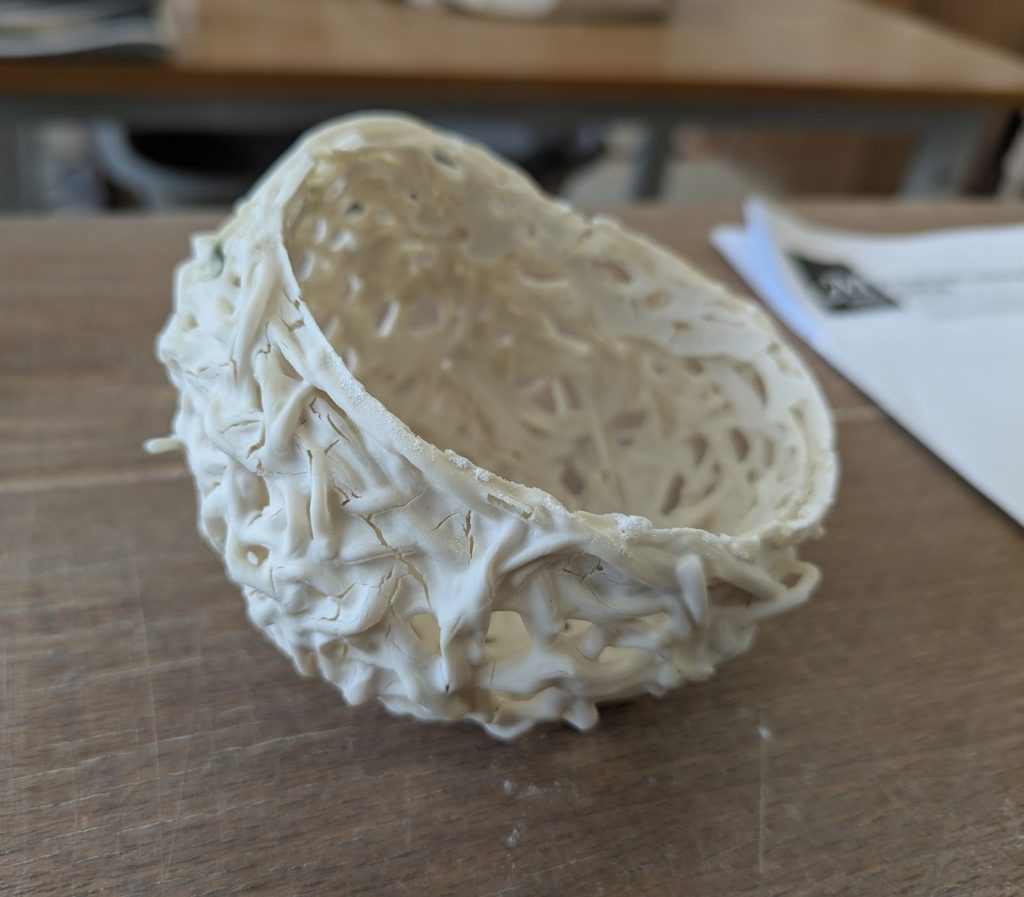
All in all, it was a very interesting and enjoyable experiment. Many thanks to Annette for her patience, and I wish her a happy retirement!

Fascinating process, Kim. Can you put the piece that fell off back on with kintsugi method as the Japanese do?
Barbara
That’s a great idea Barbara, though it does mean another new skill to learn! 🙂